Showing What Needs to Change
People need affordability, opportunity, and agency. Most Americans are squeezed by systems they did not design and decisions they had little say in shaping.
Run with Ralph is developing the Affordability & Opportunity (A&O) Agenda to help candidates, campaigns, and changemakers show what needs to change, how systems can be redesigned collaboratively, and how reforms can produce tangible results over time to meet the challenges of the present and the future.
Agenda content is be free and public. Paid role-based Playbooks are being developed for people and groups ready to put the Agenda to work.
Subscribe for Agenda rollout updates and to receive more resources about improving politics and government.

You can unsubscribe from Ralph's list at any time.
Why the A&O Agenda
Voters often distrust both political parties because promises too rarely translate into improvements they can feel in daily life. While Republicans are unpopular, Democrats are unpopular, too. People are not just frustrated by politics. They are frustrated because too many problems never seem to change:

These outcomes are not bad luck, isolated mistakes, or personal failures. They result from systems producing the outcomes they are designed to produce. If the same rules, incentives, institutions, and delivery methods stay in place, they keep producing the same outcomes—no matter who is in charge. This is why people feel so frustrated.
To change outcomes, we have to change systems.
Changing systems to produce better outcomes requires consistent electoral support. Candidates, campaigns, and elected officials cannot rebuild trust, win elections, and earn a governing mandate by only opposing unpopular policies. They need to show people what they are are for, how change happens, and how results will show up in daily life. Proving results is particularly important for reaching and persuading the independent voters who decide close elections. They are less ideological and vote based more on results than promises and platitudes.
Politicians will not be successful changing systems on their own. Better outcomes also require the active participation of trusted messengers, organizations, and community leaders in changing systems. They need to convey the message, advocate for reforms, and participate in the design and implementation of solutions—which will often involve local or regional cooperation, collaboration, and coordination more than lawmaking.
What the Agenda Covers
People need both affordability and opportunity. Affordability is whether life works now. Opportunity is whether the future feels possible.
The Affordability & Opportunity Agenda focuses on six connected areas where today’s systems are making daily life more expensive, opportunity harder to reach, public systems harder to use, people less able to shape the decisions affecting them, and the future more fragile:

Each area includes reform topics that explain affordability and opportunity challenges face, the systems producing those results, who benefits from the current rules, who pays the price, and what needs to change to produce different results. Each reform leverages one or more of the seven functions of government identified by Run with Ralph.
The goal is not just to name the problems. The goal is to change systems—the rules, incentives, institutions, and delivery methods—so they produce better results.
How the Agenda Works
The Affordability & Opportunity Agenda is designed to move from ideas to action. It does that through two connected kinds of work: reforms that focus on changing systems, and playbooks that help people and groups put the Agenda to work.

Substantive Reforms Rolled Out Over Time
Through the Agenda, Run with Ralph will develop and share reform ideas over time. Each reform will focus not only on what should change, but on how underlying systems need to change to produce better outcomes.
That means changing rules, incentives, public investment, institutional design, delivery methods, partnerships, accountability, and involving the people affected by those systems—not just slogans or isolated policy proposals.
Playbooks for Real-World Use
The Agenda will also include practical playbooks, being developed by Run with Ralph, that help people use the framework in their own work.
These playbooks are being designed for candidates, campaigns, and changemakers. They will help people explain the Agenda, adapt it to local and regional conditions, organize around practical solutions, communicate with clarity, build support for and drive systems change, show results, and build support for more change.
What Differences the Agenda Can Make
The Affordability & Opportunity Agenda is designed to help communities move beyond promises and problem descriptions.
The Agenda helps candidates, campaigns, and changemakers build the capacity to change systems—and show the results.
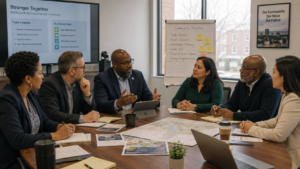
Changing systems is what makes possible the outcomes that people most care about: lower costs, better jobs and pathways, fairer rules, easier access to services, stronger accountability, and communities better prepared for disruptions.
These outcomes matter because trust is rebuilt through proof. Voters need to see what candidates, campaigns, and elected officials are fighting for, how change is supposed to happen, and whether the work is producing improved outcomes that they can feel.
Over time, that is how candidates, campaigns, and Democratic parties can win elections, deliver visible results, earn a governing mandate, and keep people involved in shaping what comes next. Supporting and participating in this process is how trusted messengers, organizations, and community leaders can foster more systems change for improving outcomes.
Where to Go Next
Run with Ralph is rolling out the Affordability & Opportunity Agenda over time. The Agenda is meant to be followed, used, and adapted by people and groups to make daily life more affordable, give people more say over the systems shaping their lives, and build more support for reforms that produce visible results.
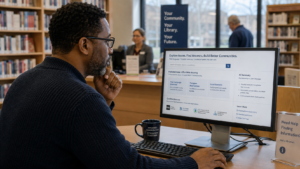
Start by getting updates, then explore the reforms and playbooks that can help you or your organization put the work into practice:
This website contains affiliate links, which means eDad Enterprises LLC may earn a commission at no extra cost to you. As an Amazon Associate, I earn from qualifying purchases. Learn more in Affiliate and Sponsorship Disclosure.