Contributing to Change
Run with Ralph is developing Playbooks for candidates, campaigns, Democratic groups, trusted messengers, organizations, and community leaders who want to put practical strategies into action to improve affordability, opportunity, and agency in people’s daily lives.
The Playbooks help people and groups focus their work, communicate clearly, build support, organize people and partners, make messages AI-ready, and keep moving when the work gets complicated. The Playbooks help build a Governing Majority to use power to fix broken systems and improve outcomes.
Find the Playbook that best fits your role and explore practical ways to put these strategies to work and to contribute to change that improves lives.

Why The Playbooks
The Affordability & Opportunity Agenda identifies what needs to change. The Governing Majority explains how people can build the power to make those changes. But neither an agenda nor a majority builds itself. People need practical ways to act from where they stand.
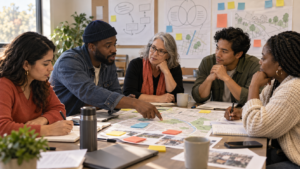
That work happens in many places: in campaigns, Democratic groups, organizations, trusted relationships, and communities between elections. It begins by listening to what people experience, understanding the systems behind their concerns, and inviting them into the work of solving shared problems. Trust grows when people have a voice, a role, and proof that change is improving daily life.
The Playbooks help turn that approach into sustained action. They give people in different roles a way to build relationships, make choices, work across differences, and keep learning from results—so their efforts can add up to a Governing Majority capable of improving people’s lives.
What The Playbooks Cover
The six Playbooks apply a shared set of strategies to the different roles people and groups play in political and community life. Each Playbook helps its users understand the people they serve, choose where they can make the greatest contribution, communicate clearly, organize support, and turn ideas into action.

Candidate Playbook
Build a candidacy grounded in purpose, listening, community relationships, credible priorities, and a clear understanding of the job the candidate is seeking.
Campaign Playbook
Turn a candidate’s purpose into an integrated strategy for organizing people, communicating effectively, using resources wisely, and adapting as the campaign develops.
Democratic Groups Playbook
Build a trusted, year-round local presence that listens to people, develops volunteers and leaders, strengthens relationships, and connects politics to solving community problems.
Trusted Messenger Playbook
Use established relationships to listen before persuading, communicate in language people trust, help them navigate a changing information environment, and invite them into meaningful action.
Organization Playbook
Clarify the organization’s purpose and distinctive contribution, align its people and partnerships, build lasting capacity, and demonstrate results.
Community Leader Playbook
Bring people together around shared concerns, work across differences, understand the systems shaping local problems, and create achievable projects that build agency and prove that collective action can make a difference.
Across all six, the Playbooks incorporate democratic pluralism, systems thinking, practical organizing, clear and AI-ready communication, continuous learning, and a commitment to improving affordability, opportunity, and agency without meeting one group’s needs at the expense of another’s rights or basic needs.
How the Playbooks Work
The Playbooks are designed to be used, not simply read. Each begins with the user’s role, purpose, and circumstances, then provides questions, practices, and planning tools that can be adapted to the work at hand.
All six follow a common method:
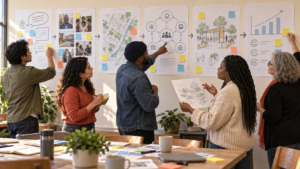
Listen → Empathize → Understand → Analyze → Design → Move → Prove
Listen to what people are experiencing and what matters to them. Empathize with how those experiences shape their views and choices. Understand the larger context, including the history, relationships, and competing needs involved. Analyze the systems, incentives, power arrangements, and information environment producing current outcomes. Design strategies with the people affected—not merely for them. Then move ideas into action, demonstrate results, learn from what happens, and adapt.
The Playbooks also help users practice democratic pluralism: bringing different people into the work, establishing shared ground rules, addressing conflicts and trade-offs honestly, and refusing to meet one group’s needs at the expense of another’s rights or basic needs.
Throughout the process, users learn to focus their efforts, build relationships and partnerships, organize people around meaningful roles, and communicate in language that is clear, credible, and ready to be found and understood in an AI-shaped information environment. The goal is not rigid adherence to a formula. It is a repeatable way to keep learning, improving, and moving the work forward when circumstances change or the work becomes complicated.
What Differences the Playbooks Can Make
The Playbooks can help turn scattered efforts into stronger, more coordinated, and more sustained action. Candidates and campaigns can become more grounded in the people and places they seek to represent. Democratic groups and organizations can build relationships, leadership, and capacity between elections. Trusted messengers and community leaders can reach people through relationships that institutions and political advertising often cannot.
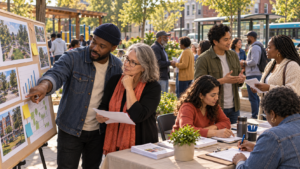
The immediate differences can be practical: better listening, clearer priorities, more credible communication, stronger partnerships, meaningful roles for participants, and strategies that can adapt when circumstances change. People are more likely to remain involved when they understand the purpose of the work, see where they fit, and experience evidence that their participation matters.
Over time, these improvements can add up. Local successes create proof that people can solve problems together. Relationships built for one effort can support the next. Volunteers can become leaders, separate groups can become durable partners, and communities can build greater capacity to influence the systems affecting their lives.
The Playbooks also provide the practical capacity to carry the Affordability & Opportunity Agenda from ideas to public understanding, organized support, implementation, and visible results. In doing so, they help build a Governing Majority with the trust, organization, and staying power to use public power well—improving affordability, opportunity, and agency while protecting everyone’s rights and basic needs. The Playbooks help people build that majority and advance that agenda through the work they can do from where they stand.
Where to Go Next
Choose the role closest to your work below. Each section describes the Playbook being developed for that role and includes a button to learn more details and join the waiting list to be notified when the Playbook is released.
Candidate
Playbook
For candidates seeking to lead with clarity, judgment, trust, and practical solutions.
Campaign
Playbook
For campaigns improving message discipline and voter-facing communication.
Democratic Groups
Playbook
For groups strengthening year-round organizing, local capacity, and trusted communication.
Trusted Messenger Playbook
For local voices connecting daily concerns, shared values, and practical solutions.
Organization
Playbook
For unions, advocates, and civic groups building support for achievable reforms.
Community Leader
Playbook
For civic leaders seeking to coordinate partners, build capacity, and produce visible results.
This website contains affiliate links, which means eDad Enterprises LLC may earn a commission at no extra cost to you. As an Amazon Associate, I earn from qualifying purchases. Learn more in Affiliate and Sponsorship Disclosure.